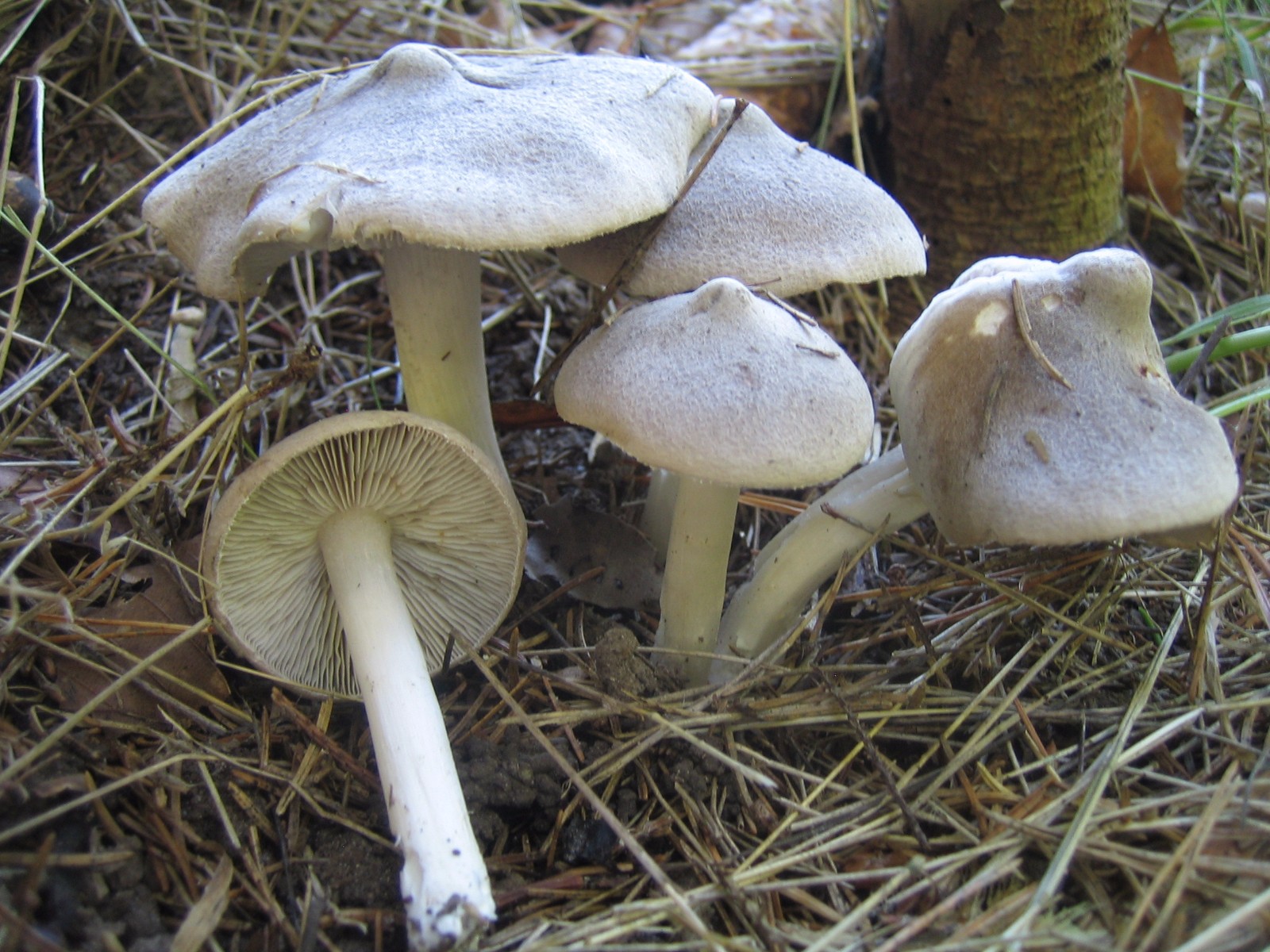
| Description |
A fungus (pl.: fungi or funguses) is any member of the group of eukaryotic organisms that includes yeasts, molds, as well as mushrooms. These organisms are classified in the biological kingdom Fungi.
A characteristic that places fungus in a different kingdom from plants, bacteria, and some protists is having chitin in their cell walls. Fungi, like animals, are heterotrophs: they acquire their nutrition by absorbing dissolved organic molecules, typically by secreting digestive enzymes into their environment. A fungus does not perform photosynthesis. Growth is their means of motility, except for spores (a few of which are flagellated), which may travel through the air or water. Fungi are the principal decomposers in ecological systems. These and other differences place fungi in a single group of related organisms, named the Eumycota (true fungi or Eumycetes), that share a common ancestor (i.e. they form a monophyletic group), an interpretation that is also strongly supported by molecular phylogenetics. This fungal group is distinct from the structurally similar myxomycetes (slime molds) and oomycetes (water molds). The discipline of biology devoted to the study of fungi is called mycology (from the Greek μύκης, mykes 'mushroom'). In the past, mycology was regarded as a branch of botany, although it is now known that fungi are genetically more closely related to animals than to plants.
Abundant worldwide, most fungi are inconspicuous because of the small size of their structures, and their cryptic lifestyles in soil or on dead matter. Fungi include symbionts of plants, animals, or other fungi and also parasites. They may become noticeable when fruiting, either as mushrooms or as molds. Fungi perform an essential role in the decomposition of organic matter and have fundamental roles in nutrient cycling and exchange in the environment. Over 90% of plants are dependent on Mycorrhizal symbiosis between plants and fungi and this process also enhances photosynthesis in plant
|